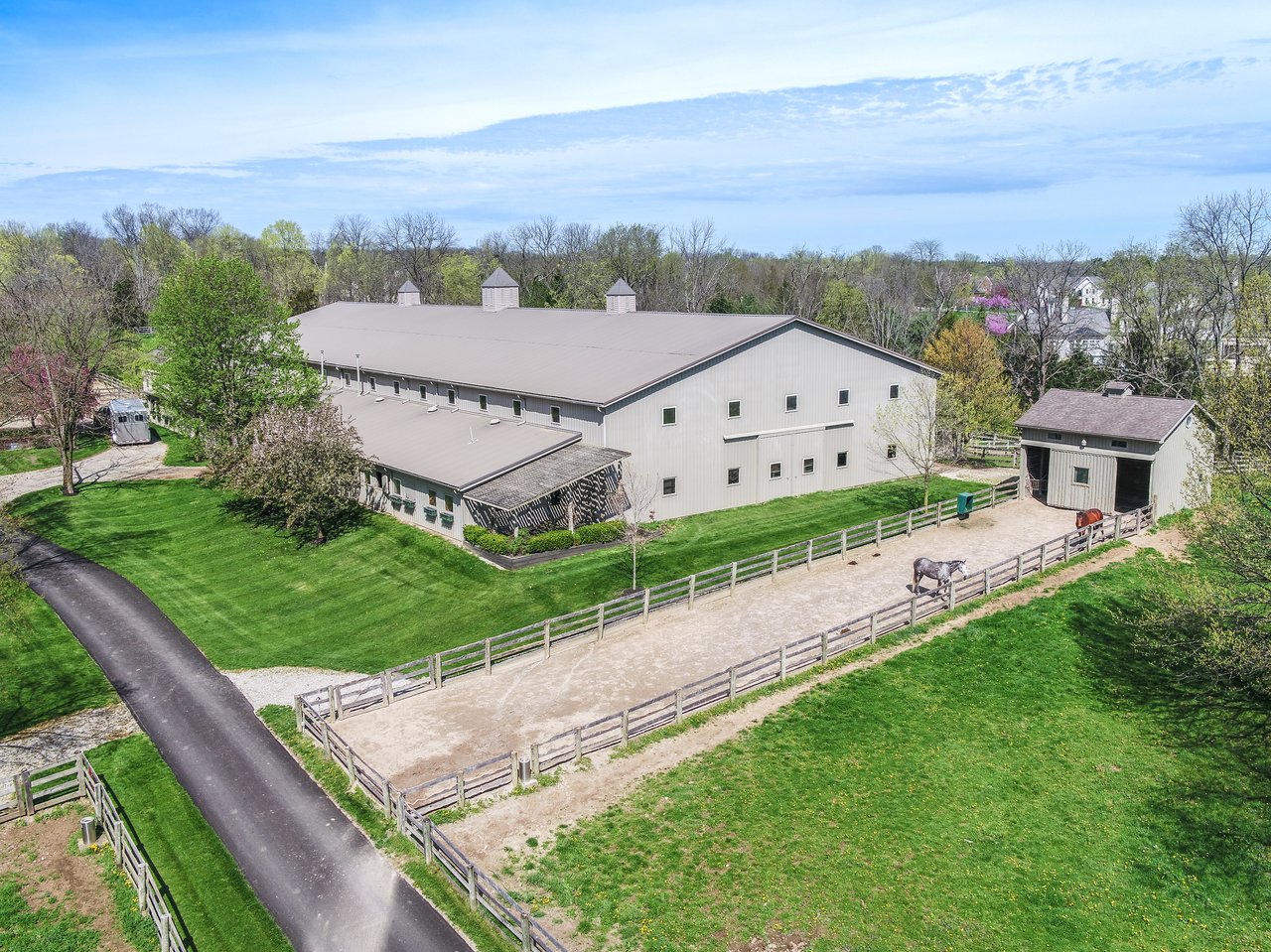
If you are shopping for an equestrian or acreage property in Delaware County, Ohio, it is easy to start with the obvious features: the barn, the fencing, the acreage, the arena, the view.
Those things matter. But they are only part of the story.
A horse property works well when the land, drainage, access, zoning, utilities, and layout all support the way you plan to use it. Two properties can look similar online and perform very differently once you understand the soils, township or village rules, driveway access, pasture condition, and long-term improvement potential.
That is especially true across Delaware County, where buyers may be comparing properties in Galena, Sunbury, Delaware, Powell, Ostrander, Radnor, Kilbourne, Ashley, and the rural areas between them. Some parcels feel like established farm properties. Others are residential acreage with limited agricultural flexibility. Some are beautifully improved but may have drainage, access, or utility limitations that are not obvious in photos.
A smart equestrian search starts with the whole property, not just the pretty parts.
Quick Answer: What Should Buyers Look for in a Delaware County Equestrian Property?
A good equestrian property should have more than acreage and a barn. Buyers should review zoning, permitted horse use, usable pasture, drainage, soil conditions, barn placement, arena construction, trailer access, utilities, and future improvement potential.
In Delaware County, jurisdiction can vary by village, township, or rural location, so buyers should verify the rules before assuming a property will support their intended use.
Why Delaware County Appeals to Equestrian Buyers
Delaware County continues to attract buyers who want more land, more privacy, and more flexibility while still staying connected to Central Ohio. For horse owners, that balance can be very appealing.
You may be looking for room for your own horses, space for a private barn, access to regional veterinary care, or a property that offers both a country setting and reasonable proximity to Columbus, Powell, Westerville, Sunbury, and Delaware.
That combination is one of the reasons equestrian buyers are drawn to this part of Central Ohio. But it also means there is a wide range of property types. In one search, buyers may be comparing established horse farms, residential acreage, former agricultural parcels, luxury estates with barns, and smaller properties with limited turnout.
Those properties may appear in the same search results, but they can function very differently.
Before getting attached to stall count, fencing, or listing photos, it helps to understand how the land is actually governed, how it drains, how it can be accessed, and whether it supports your intended use.
Confirm Zoning and Jurisdiction Before Buying Horse Property
One of the first things to confirm is where the property sits from a regulatory standpoint.
In Delaware County, a property may be located inside a village, within a township, near a municipal boundary, or in an area where county-level review applies to certain improvements. A Galena mailing address, for example, does not always mean the property is governed by the Village of Galena. The same kind of distinction can matter in and around Sunbury, Delaware, Powell, Ostrander, and other rural areas of the county.
This is important if you are thinking about adding a barn, expanding paddocks, installing new fencing, building an arena, improving a driveway, adding a wash rack, or making drainage changes.
Buyers should confirm:
- The property’s township, village, or municipal jurisdiction
- The zoning district
- Whether horses are permitted
- Whether agricultural use applies
- Any acreage thresholds or restrictions
- Setbacks for animals, barns, arenas, and manure storage
- Whether additional permits would be required for future improvements
This is not the most exciting part of a horse-property search, but it is one of the most important. A property that looks ideal online may still need verification before you know whether it can support the way you intend to use it.
Why Usable Acreage Matters More Than Total Acreage
Acreage matters, but usable acreage matters more.
Ten acres with poor drainage, awkward access, steep grade, or limited turnout may serve a horse owner less effectively than a smaller property with better layout and stronger pasture management potential. On the other hand, a small acreage parcel may look manageable but come with zoning or use limitations that affect future plans.
This is where buyers need to be careful about assumptions.
Not every acreage property can be used like a full farm. Local zoning, parcel size, deed restrictions, homeowners association rules, conservation considerations, and existing utility systems can all affect what is permitted.
For equestrian buyers, the better question is not simply, “How many acres does it have?”
It is:
Can the land support the horses, improvements, access, and daily routine you are planning?
Drainage Can Make or Break an Equestrian Property
In Central Ohio, drainage is one of the most important parts of evaluating an equestrian property.
A barn may look beautiful. A pasture may photograph well. A driveway may feel fine on a dry day. But after a heavy rain, snowmelt, or repeated freeze-thaw cycles, the property may tell a different story.
Across Delaware County, especially near creeks, low-lying areas, wooded ravines, reservoir-influenced drainage areas, and farm tile systems, water movement can have a major impact on how a property functions.
When walking an equestrian property, pay attention to:
- Low spots in pastures and turnout areas
- Mud around gates, barn entrances, and waterers
- Drainage near barn aprons and wash areas
- Driveway slope and runoff
- Standing water near arenas
- Erosion around lanes or paddocks
- How water appears to move away from buildings
- Whether neighboring properties drain toward the parcel
A property that is dry during one showing may behave differently during another season. That does not automatically make it a poor choice, but it should shape your due diligence, improvement budget, and expectations.
For horse owners, drainage is not cosmetic. It affects daily use, hoof health, pasture recovery, barn maintenance, driveway access, and long-term property costs.
Look at the Barn as Part of the Whole Site
A good barn is an asset. But the barn should not be evaluated in isolation.
Buyers often focus on stall count, aisle width, tack storage, ventilation, and overall condition. Those details matter, but the barn’s relationship to the land matters just as much.
Consider:
- How horses move from barn to turnout
- Whether the layout supports safe daily handling
- Where manure is stored
- How wash water drains
- Whether equipment can access the barn easily
- Whether hay delivery and trailer access are practical
- How the barn sits in relation to prevailing weather
- Whether future expansion is realistic
A barn that looks attractive may still create daily inefficiencies if it is poorly placed, difficult to access, or disconnected from turnout areas.
The best equestrian properties tend to have a sense of logic. The barn, pastures, lanes, gates, driveways, utilities, and storage areas all work together. That kind of layout is not always obvious in photos, but it becomes very clear once you walk the property with the intended use in mind.
Evaluate Arena Footing, Base, and Drainage
If a property includes an arena, or if you plan to build one, look beyond the surface.
Arena quality depends on more than footing. The base, drainage, grading, moisture management, and surrounding runoff all affect how the arena performs over time.
This matters in Delaware County because Central Ohio weather brings rain, snow, humidity, freeze-thaw cycles, and dry summer stretches. An arena that rides well during one season may require more maintenance during another if the base or drainage is not properly designed.
When evaluating an existing arena, look for:
- Uneven wear
- Standing water or soft areas
- Low edges or poor perimeter drainage
- Footing that feels too deep, too compacted, or inconsistent
- Evidence of washout
- Dust issues
- How water moves around the arena after storms
If you are planning to add an arena, include site work in the conversation early. Grading, drainage, base preparation, and runoff control can be significant parts of the project. A flat-looking area is not automatically arena-ready.
Pasture Quality Affects Long-Term Cost
Pasture is one of the most overlooked parts of an equestrian property search.
Buyers often ask how many acres a property has, but the more useful question is how much of that acreage can actually support healthy turnout and grazing.
Good pasture can reduce feed costs, improve daily management, and support horse health. Poor pasture can create mud, weeds, erosion, overgrazing, and higher maintenance costs.
During a showing, look at:
- Ground cover
- Signs of overgrazing
- Mud in high-traffic areas
- Fence-line wear
- Drainage near gates and water sources
- Shade and shelter
- Weed pressure
- Ability to rotate turnout
- Access between fields
- Whether the layout supports safe separation of horses
A beautiful open field is not always a functional pasture. Likewise, a pasture that needs improvement may still be worthwhile if the underlying layout, soils, and drainage are strong.
The goal is to understand not only how the property looks today, but what it will take to maintain it over time.
Soil Information Can Help Buyers Make Better Decisions
Soils affect more than crops.
For an equestrian or acreage property, soil conditions can influence drainage, pasture quality, building feasibility, septic suitability, lane placement, erosion control, and long-term maintenance. This is especially important if you are considering future improvements.
Soil data can be useful when evaluating:
- Potential barn or arena locations
- Pasture recovery
- Wet areas
- Drainage corrections
- Driveway or lane improvements
- Septic considerations
- Building sites
- Erosion concerns
For buyers comparing horse properties in Delaware County, this information can help separate a parcel that simply looks appealing from one that can realistically support the intended use.
It does not replace inspections, surveys, engineering, or professional site evaluation, but it can help guide the right questions early.
Check Trailer Access, Driveways, and Seasonal Usability
Trailer access is easy to underestimate until it becomes a daily frustration.
A property may look convenient on a map but still be difficult to use with a truck and trailer. Narrow roads, tight turns, steep driveways, soft shoulders, low visibility, and winter conditions can all affect usability.
Before closing on an equestrian property, buyers should think through:
- Road type and traffic patterns
- Driveway width
- Turning radius
- Trailer turnaround space
- Grade and slope
- Snow and ice conditions
- Access to the barn
- Emergency vehicle access
- Haul routes to veterinary care, shows, trails, or training facilities
This is especially important if the property is located on a rural road, near a curve, along a busier corridor, or in an area where winter access may be more challenging.
For horse owners, access is not just convenience. It is part of safety, emergency planning, and daily functionality.
Utilities, Septic, and Water Should Be Verified Early
Equestrian properties often require more from their utilities than a standard residential home.
Water, septic, electric, drainage, and sometimes gas or propane service all become more important when a property includes barns, wash areas, automatic waterers, caretaker space, arenas, or future outbuildings.
Buyers should verify:
- Water source and capacity
- Septic location and condition, if applicable
- Whether sewer service is required or available
- Electric service to barns or outbuildings
- Frost-free hydrants or water access
- Drainage from wash areas
- Utility easements
- Whether future improvements are feasible
Inside certain village or municipal limits, utility rules may differ from township or rural properties. That can affect septic, sewer, water, and future expansion options.
It is much better to learn those details before closing than after you have already started planning improvements.
Veterinary Access and Emergency Planning
One of the benefits of Delaware County’s location is access to the broader Central Ohio equestrian service network.
Depending on the property location, horse owners may be within reasonable reach of equine veterinarians, farriers, feed suppliers, training facilities, and emergency services. Ohio State’s equine veterinary resources in the Columbus region are also an important part of the larger support network for many Central Ohio horse owners.
Still, buyers should map logistics before closing.
Ask:
- How long would it take to haul to emergency veterinary care?
- Is the driveway trailer-friendly in bad weather?
- Can a vet or farrier access the barn easily?
- Is there room for safe loading and unloading?
- Are roads manageable in winter?
- Is the property easy to find in an emergency?
These questions may not feel urgent during the search, but they become very real when a horse needs care quickly.
A Practical Delaware County Horse-Property Checklist
Before you get attached to finishes, curb appeal, or a beautiful barn aisle, step back and look at how the property functions.
A strong equestrian purchase should be reviewed from several angles:
- Jurisdiction and zoning
- Whether horses are permitted
- Acreage and agricultural-use considerations
- Setbacks and future improvement limits
- Barn placement and condition
- Pasture quality and rotation potential
- Drainage around barns, paddocks, arenas, and driveways
- Soil conditions
- Arena base, footing, and water management
- Trailer access and turnaround space
- Road conditions and seasonal usability
- Utility service
- Septic or sewer considerations
- Water availability
- Emergency veterinary access
- Long-term maintenance needs
- Realistic improvement costs
The right property should work both on paper and on the ground.
How Ludwig Real Estate Group Helps Buyers Evaluate Equestrian Property
Buying an equestrian property is different from buying a traditional residential home.
The house matters, of course. But so does the barn. The land. The drainage. The zoning. The soil. The access. The utilities. The future use. The way the property will function not just on closing day, but through every season.
At Ludwig Real Estate Group, we help buyers look beyond the surface features and evaluate acreage with a practical, property-first approach. For equestrian buyers, that means considering not only what is already there, but what the property can realistically support.
A beautiful property should also be a workable one.
In Delaware County, the strongest equestrian purchases are usually the ones where the land, improvements, and long-term use align. When those pieces come together, the property does more than look right. It lives right.
FAQs
What should equestrian buyers verify first in Delaware County?
Start with zoning, jurisdiction, permitted horse use, parcel size, deed restrictions, and whether future improvements such as barns, arenas, fencing, or driveway changes are allowed.
Can every acreage property in Delaware County be used for horses?
No. Acreage alone does not mean horses are permitted. Buyers should verify zoning, parcel size, local rules, deed restrictions, HOA requirements, drainage, utilities, and access before assuming a property will work for equestrian use.
How much acreage do you need for horses in Delaware County?
There is no single answer because zoning, pasture quality, drainage, and intended use all matter. A smaller well-managed property may function better than a larger parcel with poor drainage, limited turnout, or restrictive zoning.
Why is drainage important on horse properties?
Drainage affects mud control, pasture health, barn access, arena performance, driveway usability, and long-term maintenance costs. A property that looks dry during a showing may perform differently after heavy rain or snowmelt.
What should buyers look for in an existing riding arena?
Buyers should evaluate footing, base condition, drainage, grading, moisture control, dust, uneven wear, and how water moves around the arena after storms.
Why do soils matter when buying equestrian land?
Soils can affect pasture quality, drainage, erosion, septic suitability, building feasibility, lane placement, and the cost of future improvements.
Should trailer access be reviewed before closing?
Yes. Driveway width, slope, turning radius, road conditions, winter access, and emergency vehicle access can all affect whether the property functions well for horse ownership.
What utility issues should equestrian buyers consider?
Buyers should verify water source and capacity, septic or sewer service, electric service to barns and outbuildings, frost-free water access, drainage from wash areas, and whether future improvements are realistic based on the property’s utility setup.
Is Delaware County a good area for equestrian buyers?
Delaware County can be a strong fit for equestrian buyers who want acreage, privacy, and access to Central Ohio services. The best properties are the ones where zoning, land, drainage, access, and improvements align with the buyer’s intended use.